

Finding your digital assets buried in a pile of outdated data is frustrating when AI search engines reward only the most relevant and well-structured content. With generative engines like ChatGPT shifting focus toward authoritative, contextually rich content, the drive to rethink traditional SEO has become urgent. This practical guide shows how a stepwise data assessment and tool integration unlocks discoverability and prepares your brand for ongoing AI-powered search shifts.
Table of Contents
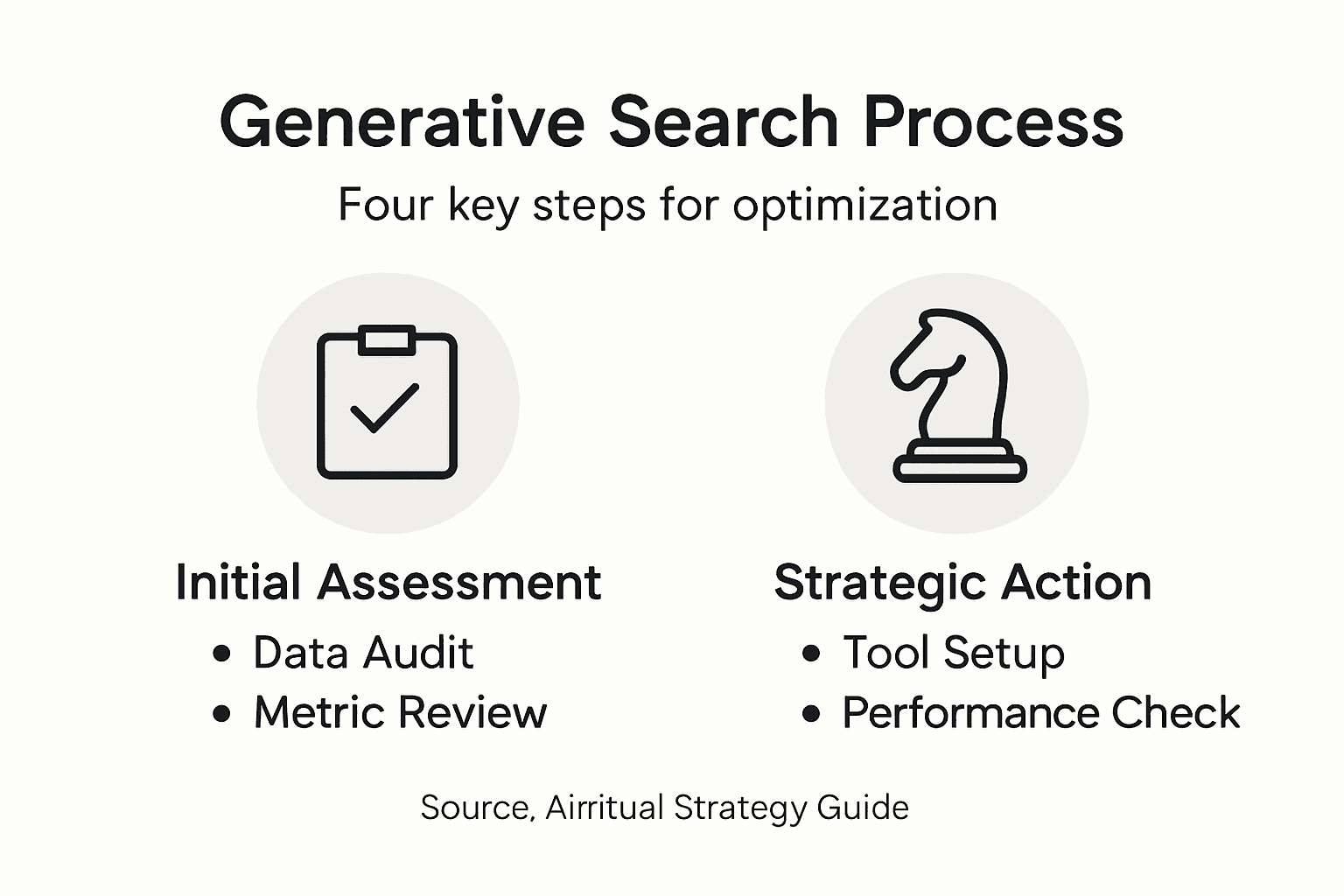
- Step 1: Assess Current Search Landscape And Data Readiness
- Step 2: Implement Tailored Generative Search Optimization Tools
- Step 3: Integrate AI-Driven Content Strategies Systemwide
- Step 4: Monitor Performance And Validate Search Gains
Quick Summary
| Key Point | Explanation |
|---|---|
| 1. Conduct a data readiness audit | Assess your existing content and metadata to identify gaps and weaknesses before optimization. |
| 2. Use specialized search optimization tools | Implement tools that enhance content structure and ensure compatibility with AI search engines. |
| 3. Develop interconnected content strategies | Create semantic topic clusters to unify content across departments for better AI comprehension. |
| 4. Monitor AI search performance metrics | Track citation frequency and content relevance to validate the effectiveness of generative search optimization. |
| 5. Establish a cross-functional optimization team | Form a team that integrates marketing, technology, and content creation to ensure a cohesive AI content strategy. |
Step 1: Assess current search landscape and data readiness
Generative search optimization requires a strategic approach to understanding your current data ecosystem and search environment. By systematically evaluating your digital assets and search capabilities, you’ll establish a robust foundation for enhanced AI-driven visibility.
To effectively assess your search landscape, start by conducting a comprehensive data inventory and readiness audit. This involves several critical steps:
- Analyze existing content repositories and digital assets
- Evaluate current metadata and semantic tagging structures
- Review historical search performance metrics
- Identify potential knowledge gaps or content weaknesses
Understanding the evolving generative search behaviors is crucial for optimization. Recent research highlights that AI search engines increasingly prioritize authoritative, contextually rich content with strong cross-language stability. This means your data must not only be accurate but also adaptable and semantically nuanced.
Successful generative search optimization demands a proactive, data-driven approach that anticipates AI search engine preferences and user intent.
Key metrics to track during your assessment include content relevance, citation quality, information freshness, and semantic interconnectedness. By meticulously mapping these elements, you’ll create a strategic roadmap for generative search success.
Here’s how key search assessment metrics contribute to generative optimization:
| Metric | What It Measures | Business Impact |
|---|---|---|
| Content Relevance | Alignment with user intent | Increases AI-driven visibility |
| Citation Quality | Authority and credibility | Boosts trust and search rank |
| Information Freshness | Timeliness of content updates | Ensures continued discoverability |
| Semantic Connectedness | Depth of topic relationships | Enhances AI comprehension |
Pro tip: Invest in a structured content audit tool that can help you systematically evaluate your digital assets against emerging AI search optimization criteria.
Step 2: Implement tailored generative search optimization tools
Implementing specialized generative search optimization tools requires a strategic and nuanced approach that goes beyond traditional SEO techniques. Your goal is to create a comprehensive toolkit that enhances your content’s discoverability and relevance across AI-powered search platforms.
Begin by selecting tools that support comprehensive generative engine optimization frameworks. These advanced solutions should provide capabilities for:
- Semantic content structuring
- Schema.org markup integration
- AI-friendly content design
- Multilingual optimization strategies
- Technical metadata enhancement
Each tool in your optimization stack must address specific aspects of AI search comprehension. This means moving beyond keyword density and focusing on creating contextually rich, authoritative content that AI engines can easily parse and reference.
Effective generative search optimization demands a holistic approach that treats content as an interconnected knowledge ecosystem.
Key implementation steps include deploying structured data markup, optimizing for natural language processing, and creating modular content designs that support AI comprehension. By systematically integrating these tools, you’ll develop a robust generative search strategy that adapts to evolving AI search technologies.

The following table summarizes core generative optimization tools and their strategic benefits:
| Tool Type | Primary Function | Strategic Benefit |
|---|---|---|
| Semantic Structuring | Organizes content contextually | Improves AI parse and relevance |
| Schema.org Markup | Adds structured metadata | Enables richer search snippets |
| Multilingual Optimization | Adapts content for multiple languages | Expands global visibility |
| Technical Metadata | Enhances indexing accuracy | Supports higher search precision |
Pro tip: Regularly audit and recalibrate your generative search optimization tools to ensure they remain aligned with the latest AI search engine capabilities and algorithmic preferences.
Step 3: Integrate AI-driven content strategies systemwide
Systemwide integration of AI-driven content strategies demands a holistic approach that transforms how your organization creates, manages, and optimizes digital content. By developing a comprehensive framework that aligns content creation with AI search engine requirements, you’ll establish a robust foundation for enhanced digital visibility.
Begin by developing semantic topic clusters that create interconnected content ecosystems. This strategic approach involves:
- Mapping content relationships across departments
- Creating hierarchical knowledge structures
- Establishing consistent content guidelines
- Implementing cross-functional AI content standards
- Developing enterprise-wide semantic tagging protocols
Successful systemwide integration requires breaking down traditional content silos and creating unified content intelligence platforms. This means establishing centralized content repositories that support AI comprehension, enable dynamic content recombination, and maintain consistent semantic integrity across all organizational communications.
Effective AI content strategies transform content from isolated assets into interconnected knowledge networks that AI engines can readily understand and utilize.
Key implementation steps include developing cross-departmental content governance frameworks, training teams on AI-friendly content creation techniques, and establishing measurement protocols that track AI search performance across different content types and platforms.
Pro tip: Create a dedicated cross-functional AI content optimization team that bridges marketing, technology, and content creation departments to ensure consistent and strategic implementation of AI-driven content approaches.
Step 4: Monitor performance and validate search gains
Validating generative search performance requires a systematic approach that goes beyond traditional search metrics. Your objective is to develop a comprehensive monitoring strategy that tracks the nuanced ways AI platforms interact with and reference your content.
Advanced tracking mechanisms help organizations measure critical generative search performance indicators. Key metrics to monitor include:
- Citation frequency across AI platforms
- Brand mention context and sentiment
- Content discovery rates in AI-generated responses
- Semantic relevance and topic authority scores
- Prompt response effectiveness
Successful performance validation demands continuous adaptive measurement techniques that reflect the dynamic nature of AI search environments. This means establishing flexible analytics frameworks that can quickly interpret emerging patterns in AI content selection and referencing behaviors.
Generative search performance is not a static metric but a dynamic ecosystem of content visibility and authoritative representation.
Implementation involves creating specialized dashboards that track AI-specific performance indicators, conducting periodic content audits, and developing responsive optimization strategies based on real-time insights. By maintaining a proactive monitoring approach, you’ll ensure your content remains strategically positioned within evolving AI search landscapes.
Pro tip: Develop cross-functional performance review sessions that bring together content creators, SEO specialists, and data analysts to interpret generative search metrics holistically.
Elevate Your Generative Search Optimization with Proven AI Expertise
Mastering generative search optimization is vital to overcoming the challenges of AI-driven content visibility. This article highlights key pain points such as assessing your data landscape, implementing semantic structuring, and integrating AI content strategies systemwide. If you want to move beyond traditional SEO and capture AI search relevance with tailored tools and frameworks, understanding these concepts is essential.
At Airitual, we specialize in helping organizations navigate this complex process through strategic, customizable AI solutions. Our expertise in GEO | Artificial Intelligence equips you to build interconnected knowledge ecosystems that boost your authoritative presence in AI search results. Start winning with AI-driven search performance by partnering with a dedicated consultant focused on your unique data and content needs.
Discover how to transform your digital visibility today by exploring our services at Airitual and take the first step to mastering generative search optimization that delivers measurable results.
Frequently Asked Questions
What is generative search optimization?
Generative search optimization is the process of enhancing your content to align with AI-driven search engines. To implement this, perform a thorough audit of your existing content and data to identify areas for improvement.
How can I assess my current search landscape for optimization?
Begin by conducting a data inventory and readiness audit, which includes analyzing your content, evaluating metadata, and reviewing historical performance metrics. Aim to complete this assessment to establish a strong foundation for your generative search strategy within 30 days.
What essential tools should I implement for generative search optimization?
Select tools that enhance semantic content structure, schema markup, and AI-friendly design. Focus on deploying at least two key tools in your optimization stack to improve content discoverability and relevance across AI platforms.
How can I measure the effectiveness of my generative search efforts?
Monitor performance through advanced tracking of citation frequency, brand mentions, and content discovery rates. Set up a dashboard to review these metrics weekly to evaluate your improvements and adjust strategies accordingly.
What steps can I take to integrate AI-driven content strategies across my organization?
Develop semantic topic clusters for interconnected content, and establish cross-departmental content guidelines. Initiate this integration by organizing an introductory meeting with all relevant teams to align on the new strategies within the next month.
How often should I audit my content for generative search optimization?
Conduct periodic content audits every 3–6 months to ensure your content continues to meet evolving AI search standards. Schedule these audits to align with your content release cycles for the best results.
Recommended
- Top 6 Best Generative Search Tools in 2026 for Enhanced Business Efficiency | Artificial Intelligence
- Generative Search: AI-Powered Student Engagement | Artificial Intelligence
- SEO? | Artificial Intelligence
- Lead Generation with Artificial Intelligence for Higher ROI | Artificial Intelligence
- SEO Campaign Brief | Cloudfusion – SEO Services
Recent Comments