
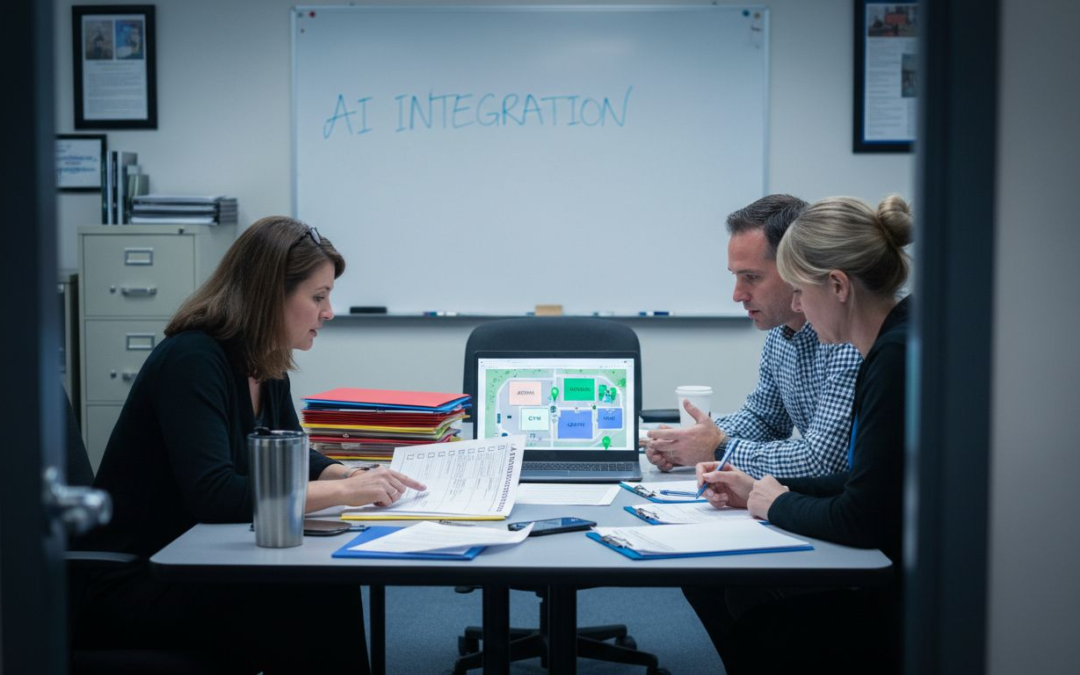
Many educational administrators see the promise of AI but struggle to know where to begin. Aligning AI use with your school’s values and infrastructure is not just about adding new technology. It requires a thoughtful plan that balances ethics, teacher expertise, and clear educational goals. This step-by-step guide highlights the most effective actions for building a strong foundation and creating sustainable, AI-driven personalized learning experiences for every student.
Table of Contents
- Step 1: Assess Institutional Readiness For AI Integration
- Step 2: Identify And Select Appropriate AI Learning Tools
- Step 3: Customize AI Solutions To Fit Curriculum Needs
- Step 4: Implement Personalized Learning Paths With AI
- Step 5: Monitor And Evaluate Student Engagement And Achievement
Quick Summary
| Main Insight | Detailed Explanation |
|---|---|
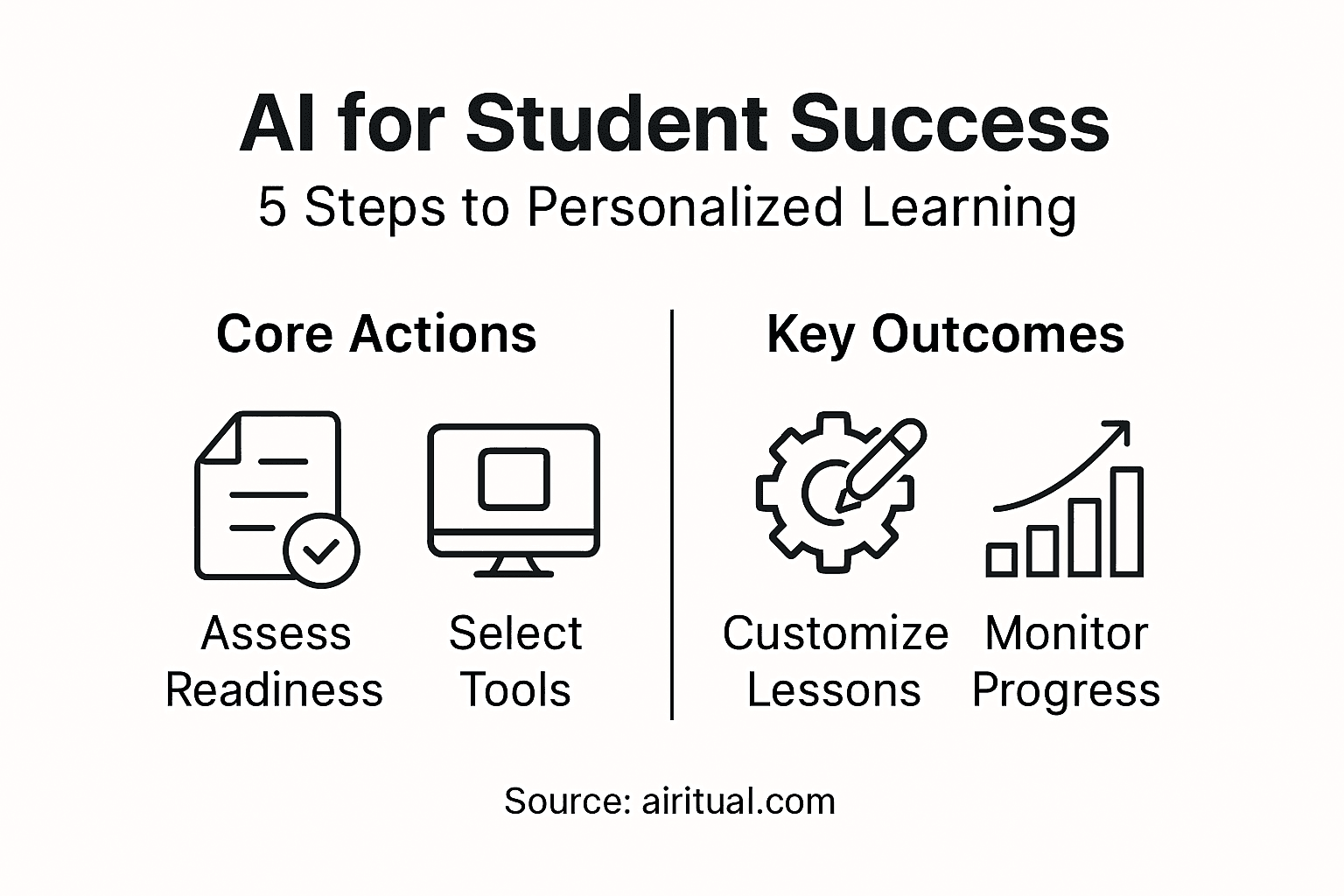
| 1. Assess AI readiness thoroughly | Conduct a comprehensive audit to evaluate technological resources, staff skills, and ethical considerations for AI integration. |
| 2. Choose effective AI tools carefully | Use a selection matrix to evaluate AI tools based on pedagogical effectiveness and alignment with educational goals and standards. |
| 3. Customize AI for curriculum needs | Map the curriculum and engage educators in adapting AI tools to meet specific learning objectives and foster inclusive experiences. |
| 4. Create personalized learning paths | Use AI algorithms to design adaptive learning pathways that automatically respond to individual student strengths and challenges. |
| 5. Implement robust monitoring systems | Develop multidimensional tracking systems to assess student engagement and performance, ensuring data-driven insights guide instructional strategies. |
Step 1: Assess institutional readiness for AI integration
Assessing your educational institution’s readiness for AI integration is a critical first step toward transforming learning experiences. This process will help you understand your current technological capabilities, identify potential challenges, and create a strategic roadmap for successful AI implementation.
Begin by conducting a comprehensive institutional audit that examines multiple dimensions of AI readiness. The U.S. Department of Education recommends evaluating four key areas: technological infrastructure, staff digital literacy, ethical considerations, and alignment with educational goals. Start by assembling a cross functional team including administrators, IT specialists, educators, and technology experts who can provide holistic insights into your institution’s current state.
Your assessment should include detailed evaluations of existing technological resources, current digital learning platforms, staff training capabilities, and technology adoption patterns. Cambridge University insights highlight the importance of an evidence driven approach that prioritizes long term educational benefits. Conduct surveys and interviews with educators to understand their technology comfort levels, identify potential resistance points, and gauge enthusiasm for AI integration. Map out your current technological ecosystem including learning management systems, data infrastructure, and digital learning tools to determine compatibility and potential upgrade requirements.
Pro tip: Create a detailed scorecard that objectively measures your institution’s AI readiness across technical, human, and strategic dimensions to provide a clear roadmap for future implementation.
Step 2: Identify and select appropriate AI learning tools
Selecting the right AI learning tools is a strategic process that can significantly transform your educational institution’s technological capabilities and student learning experiences. Your goal is to find AI solutions that not only enhance pedagogical approaches but also align with your institution’s specific educational objectives and technological infrastructure.
UNESCO guidance for policymakers emphasizes evaluating AI tools through a comprehensive lens of inclusion, equity, and core competency development. Begin by creating a detailed selection matrix that assesses potential AI learning tools across multiple critical dimensions. These dimensions should include pedagogical effectiveness, technological compatibility, ethical standards, accessibility features, data privacy protections, and alignment with curriculum goals. Conduct thorough research and request demonstrations from potential AI tool providers to understand their specific capabilities and limitations.
The AACSB framework recommends moving beyond pilot testing to strategic deployment by selecting tools with proven efficacy and scalability. Engage your cross functional team in rigorous evaluation processes that involve detailed testing, stakeholder feedback, and alignment checks. Prioritize AI tools that offer transparent algorithms, customizable learning experiences, robust performance tracking, and seamless integration with existing educational technologies. Pay special attention to tools that provide adaptive learning pathways, real time student performance analytics, and intuitive interfaces for both educators and learners.
Pro tip: Create a comprehensive scoring rubric with weighted criteria to objectively evaluate and compare different AI learning tools, ensuring a systematic and data driven selection process.
The table below summarizes essential dimensions for evaluating AI learning tools:
| Evaluation Dimension | Why It Matters | Example Focus Area |
|---|---|---|
| Pedagogical Effectiveness | Improves learning outcomes | Adaptive content delivery |
| Technological Compatibility | Integrates with existing systems | LMS integration support |
| Ethical Standards | Promotes responsible use | Transparent algorithms |
| Accessibility Features | Enables inclusive learning | Text-to-speech functionality |
| Data Privacy Protections | Safeguards student data | Compliance with regulations |
| Curriculum Alignment | Supports academic objectives | Standards-based content |
Step 3: Customize AI solutions to fit curriculum needs
Customizing AI solutions to align with specific curriculum requirements is a nuanced process that demands careful strategic planning and thoughtful implementation. Your primary objective is to transform AI tools from generic platforms into targeted educational resources that enhance learning outcomes and support unique institutional goals.

The U.S. Department of Education recommends a phased approach to AI customization that prioritizes maintaining educational integrity while leveraging technological capabilities. Begin by conducting a comprehensive curriculum mapping exercise that identifies specific learning objectives, skill development needs, and potential areas where AI can provide targeted support. Analyze each subject area and grade level to understand the precise competencies students must develop, then evaluate AI tools based on their ability to address these specific educational requirements.
UNESCO emphasizes aligning AI applications with curriculum standards while promoting equity and inclusive learning experiences. Engage your teaching staff in collaborative customization processes that allow them to adjust AI tool parameters, create personalized learning pathways, and integrate adaptive technologies that respond to individual student needs. Focus on developing AI solutions that provide granular insights into student performance, enable real time feedback, and support differentiated instruction strategies that accommodate diverse learning styles and academic backgrounds.
Pro tip: Develop a flexible AI customization framework that allows continuous refinement and adaptation, treating AI integration as an evolving process rather than a one time implementation.
Step 4: Implement personalized learning paths with AI
Implementing personalized learning paths through AI represents a transformative approach to educational customization that adapts dynamically to individual student needs. Your goal is to create an adaptive learning environment that responds intelligently to each student’s unique academic journey, learning style, and performance trajectory.
Brookings Institution highlights AI’s potential for creating targeted educational experiences that support diverse learner profiles. Begin by establishing baseline student assessments that capture individual academic strengths, knowledge gaps, and learning preferences. Utilize AI algorithms to analyze these initial assessments and generate customized learning pathways that automatically adjust content difficulty, pace, and instructional strategies based on continuous student performance data. This approach enables real time intervention and support, ensuring that each student receives precisely targeted educational resources.
According to artificial intelligence in education research, personalized learning paths are most effective when they incorporate adaptive feedback mechanisms and intelligent tutoring systems. Design your AI implementation to provide granular insights into student progress, offering immediate scaffolding for challenging concepts and accelerated content for areas of demonstrated mastery. Integrate machine learning algorithms that can predict potential learning obstacles and proactively suggest supplemental resources, creating a responsive educational ecosystem that empowers students to take ownership of their academic growth.
Pro tip: Establish a continuous feedback loop that allows educators to review and refine AI generated learning paths, ensuring human expertise remains central to the personalization process.
Step 5: Monitor and evaluate student engagement and achievement
Monitoring and evaluating student engagement and achievement through AI requires a sophisticated approach that combines data analysis, continuous assessment, and strategic interpretation. Your objective is to develop a comprehensive system that provides meaningful insights into student learning progress while maintaining a holistic view of educational outcomes.
The Institute of Education Sciences supports rigorous data driven methods for tracking student performance and engagement. Implement a multidimensional tracking system that captures both quantitative metrics like test scores and quiz performance as well as qualitative indicators such as participation levels, learning time, and cognitive effort. Utilize AI algorithms to aggregate and analyze these diverse data points, generating comprehensive student profiles that reveal nuanced patterns of learning behavior and academic development.
NIST emphasizes trustworthy AI evaluation methods that ensure accurate and transparent assessment practices. Design your monitoring framework to include multiple verification layers that cross reference different performance indicators, validate AI generated insights through human review, and maintain clear documentation of assessment methodologies. Integrate adaptive dashboards that allow educators to drill down into individual student data, compare performance trends, and identify both learning opportunities and potential intervention points with precision and clarity.
Pro tip: Establish regular calibration sessions where educators review and validate AI generated performance insights to ensure human expertise remains integral to the assessment process.
Here’s a high-level overview comparing key steps in AI integration for education:
| Stage of AI Integration | Main Objective | Typical Actions | Critical Success Factor |
|---|---|---|---|
| Assess Readiness | Establish baseline capacity | Audit tech, staff, ethics | Comprehensive, unbiased audit |
| Select Tools | Match needs with AI capabilities | Research, evaluate, pilot | Clear selection rubric |
| Customize Solutions | Fit AI to curriculum | Curriculum mapping, adjustments | Ongoing stakeholder input |
| Personalize Learning | Adapt to individual learner | Dynamic pathways, analytics | Real-time feedback loops |
| Monitor & Evaluate | Track progress, improve outcomes | Aggregate data, analyze | Thorough, actionable insights |
Unlock Personalized Learning Success with Expert AI Integration
Personalizing learning with AI is a powerful way to boost student engagement and achievement. This article highlights challenges such as customizing AI tools to fit curriculum needs and implementing dynamic learning paths that respond to individual student progress. Educators and institutions face the complex task of selecting AI solutions that align with their unique goals while maintaining ethical standards and accessibility. If you are seeking to transform your educational environment with tailored AI-driven strategies that drive measurable results, you are not alone.
At airitual.com, we specialize in guiding educational institutions through the critical steps of AI readiness assessment, strategic AI tool selection, and adaptive solution customization. Our consultative approach ensures schools and educators receive AI-powered tools specifically designed for personalized learning paths and real-time performance insights. Don’t let uncertainty slow your journey to student success. Explore how our AI-powered tools for education can empower your staff and students today. Take advantage of our free strategy sessions and partner with a trusted local expert committed to your unique needs.
Ready to harness AI to create truly personalized learning experiences? Visit https://www.airitual.com/ now and start your transformation toward smarter education delivery.
Frequently Asked Questions
How can I assess my institution’s readiness for AI integration?
Begin by conducting a comprehensive institutional audit that examines your technological infrastructure, staff digital literacy, ethical considerations, and alignment with educational goals. Assemble a cross-functional team to gather insights and develop a clear roadmap for effective AI implementation.
What steps should I take to select appropriate AI learning tools?
Create a detailed selection matrix that evaluates potential AI tools based on pedagogical effectiveness, technological compatibility, ethical standards, and accessibility features. Engage your team in rigorous evaluation processes, including testing and stakeholder feedback, to ensure the tools align with your curriculum objectives.
How can I customize AI solutions to fit specific curriculum needs?
Conduct a curriculum mapping exercise to identify specific learning objectives and skill development areas. Collaborate with your teaching staff to adjust AI tool parameters, allowing for personalized learning pathways that cater to individual student needs.
What should I include in personalized learning paths using AI?
Implement baseline assessments to understand individual student strengths and knowledge gaps. Utilize AI algorithms to create customized learning pathways that adapt based on real-time performance data, ensuring targeted educational support for each student.
How can I effectively monitor and evaluate student engagement and achievement with AI?
Develop a multidimensional tracking system that captures both quantitative metrics, like test scores, and qualitative data, such as participation levels. Use AI to analyze this data and generate comprehensive student profiles, making it easier to identify areas for improvement and intervention.
What is the importance of continuous feedback from educators in AI integration?
Continuous feedback ensures that the AI-generated insights are refined and aligned with educational standards. Establish regular calibration sessions for educators to review performance data, helping maintain a human-centered approach to academic assessment.
Recent Comments