

Bringing real change to your curriculum often starts with identifying what your students truly need and how your team can adapt. For educational leaders across the United States and Canada, choosing and implementing generative AI hinges on understanding both your current readiness and future potential. By leveraging frameworks like the AI Readiness Framework and UNESCO’s AI Competency Framework, you gain a strategic foundation for making informed decisions and advancing student engagement with personalized, ethical technology.
Table of Contents
- Step 1: Assess Curriculum Needs And AI Readiness
- Step 2: Select Generative AI Tools For Curriculum Design
- Step 3: Create Personalized Learning Resources Using AI
- Step 4: Integrate Generative AI Outputs Into Lesson Plans
- Step 5: Evaluate Curriculum Effectiveness And Refine With AI Insights
Quick Summary
| Key Point | Explanation |
|---|---|
| 1. Assess AI readiness comprehensively | Evaluate your institution’s current technological capabilities, educator skills, and student understanding to identify areas for AI integration. |
| 2. Select appropriate generative AI tools | Choose AI tools that align with educational objectives and enhance personalized learning without compromising critical thinking. |
| 3. Personalize learning resources effectively | Use AI to develop customized educational materials that cater to individual student needs and diverse learning styles. |
| 4. Integrate AI outputs into lesson plans | Review and adapt AI-generated content to ensure it meets educational standards and aligns with pedagogical goals. |
| 5. Utilize AI insights to refine curriculum | Implement AI-driven analytics to assess curriculum effectiveness and make data-informed adjustments for continuous improvement. |
Step 1: Assess curriculum needs and AI readiness
Successfully integrating generative AI into your curriculum starts with a comprehensive assessment of your educational environment’s current state and potential. This critical first step helps you understand your institution’s AI readiness and identify specific areas where technology can enhance student learning.
Begin by conducting a thorough evaluation using the AI Readiness Framework developed by aiEDU. This involves examining your existing technological infrastructure, educators’ digital competencies, and students’ current understanding of AI concepts. Review your current curriculum materials, identify potential AI integration points, and assess the technical skills of your teaching staff. Pay special attention to ethical considerations and the potential impact on learning outcomes. UNESCO’s AI Competency Framework recommends creating a comprehensive inventory that maps existing digital resources, technology access, and potential skill gaps among educators and students.
The assessment process should include stakeholder interviews with administrators, teachers, and technology coordinators to gain insights into current technological capabilities and potential resistance points. Create a detailed report that highlights your institution’s strengths, challenges, and opportunities for AI curriculum integration. This document will serve as your strategic roadmap for future implementation.
Pro tip: Conduct a pilot program with a small, motivated group of educators to test AI integration strategies before full scale implementation.
Step 2: Select generative AI tools for curriculum design
Selecting the right generative AI tools is crucial for transforming your curriculum development process and enhancing student learning experiences. This step involves carefully evaluating and choosing technological solutions that align with your educational objectives and pedagogical approach.
Start by examining AI tools through the lens of educational technology integration, focusing on platforms that offer personalized learning capabilities and adaptable curriculum design features. The U.S. Department of Education recommends assessing AI tools based on their ability to augment teaching without compromising critical thinking skills. Look for tools that provide robust content generation, adaptive learning pathways, and built-in ethical guidelines. Prioritize solutions that offer comprehensive features such as lesson plan customization, student performance analytics, and flexible integration with existing educational technologies.
When evaluating potential AI tools, create a detailed comparison matrix that scores each platform across key criteria. Consider factors like ease of use, compatibility with your current systems, data privacy protections, customization options, and scalability. Engage your teaching staff in trial sessions to gather firsthand insights about each tool’s practical classroom applications. Seek solutions that not only generate content but also provide meaningful insights into student learning patterns and potential knowledge gaps.
Pro tip: Request comprehensive demonstration sessions and trial periods from AI tool vendors to thoroughly assess their real world classroom effectiveness before making a final selection.
Here’s a comparison of key criteria to consider when selecting generative AI tools for curriculum design:
| Criteria | Description | Impact on Curriculum | Example Consideration |
|---|---|---|---|
| Content Customization | Ability to tailor materials to needs | Supports diverse learning styles | Can adapt lessons for each student |
| Integration Ease | Compatibility with current systems | Lowers tech barriers for educators | Works with existing LMS platforms |
| Data Privacy | Protection of student information | Maintains ethical standards | Provides GDPR-compliant analytics |
| Scalability | Capacity to expand usage | Supports growth across grades | Effective in both small pilots and school-wide use |
Step 3: Create personalized learning resources using AI
Personalizing learning resources through AI enables educators to develop targeted educational materials that adapt to individual student needs and learning styles. This powerful approach transforms traditional curriculum design by creating dynamic, responsive learning experiences that engage students more effectively.

Begin by leveraging AI technologies to develop adaptive learning materials that can dynamically adjust to each student’s comprehension level and learning pace. Utilize generative AI platforms that offer granular content customization options, allowing you to input specific learning objectives, student background information, and desired complexity levels. These tools can help you generate worksheets, practice questions, reading materials, and interactive content that precisely match individual student requirements. Pay special attention to creating resources that support diverse learning needs, including materials for students with different cognitive abilities, language backgrounds, and learning preferences.
When generating personalized resources, implement a systematic approach that combines AI capabilities with pedagogical expertise. Use AI tools to analyze student performance data, identify knowledge gaps, and generate targeted supplementary materials. UNESCO recommends ensuring that AI generated content maintains high educational standards and promotes inclusive learning environments. Always review and refine AI generated materials to confirm accuracy, relevance, and alignment with curriculum goals. Integrate feedback mechanisms that allow continuous improvement of the personalized learning resources based on student interaction and performance metrics.
Pro tip: Develop a standardized review process for AI generated learning resources to ensure educational quality and maintain human oversight in content creation.
This table summarizes how AI can personalize learning resources at each step:
| Step | AI Contribution | Educator’s Role | Student Benefit |
|---|---|---|---|
| Analyze Performance | Identifies gaps with data | Reviews AI findings | Receives targeted support |
| Generate Materials | Creates customized content | Curates and edits outputs | Gets resources that match needs |
| Monitor Progress | Tracks improvement trends | Adjusts strategies as needed | Experiences adaptive learning pace |
Step 4: Integrate generative AI outputs into lesson plans
Successfully incorporating generative AI outputs into lesson plans requires a strategic and thoughtful approach that maintains educational integrity while leveraging technological innovation. This process transforms traditional curriculum development by introducing adaptive and intelligent content generation capabilities that can enhance student learning experiences.
Begin by implementing responsible AI integration that aligns with your specific pedagogical objectives. Carefully review AI generated content to ensure it meets curriculum standards, addresses learning goals, and maintains academic rigor. Create a systematic workflow where AI outputs serve as supplementary resources rather than primary instructional materials. Break down each AI generated resource into modular components that can be customized and refined. Evaluate the content for accuracy, relevance, and potential bias by cross referencing with established educational resources and expert pedagogical guidelines.
Establish a comprehensive review protocol that involves multiple stages of assessment and human oversight. Collaborate with teaching colleagues to validate AI generated materials, ensuring they provide meaningful learning experiences and support diverse student needs. Use AI tools to generate draft content, lesson outlines, practice questions, and supplementary materials while maintaining a critical eye on the quality and educational value. Integrate feedback mechanisms that allow continuous improvement of AI generated resources based on student performance and teacher insights. Prioritize transparency by clearly documenting the use of AI in curriculum development and maintaining an open dialogue about technological integration with students and stakeholders.
Pro tip: Create a standardized evaluation rubric for assessing AI generated educational content to maintain consistent quality and educational standards.
Step 5: Evaluate curriculum effectiveness and refine with AI insights
Utilizing artificial intelligence to assess and improve curriculum effectiveness provides educators with unprecedented opportunities to optimize student learning experiences. This systematic approach transforms traditional evaluation methods by introducing data driven insights that reveal nuanced performance patterns and learning dynamics.
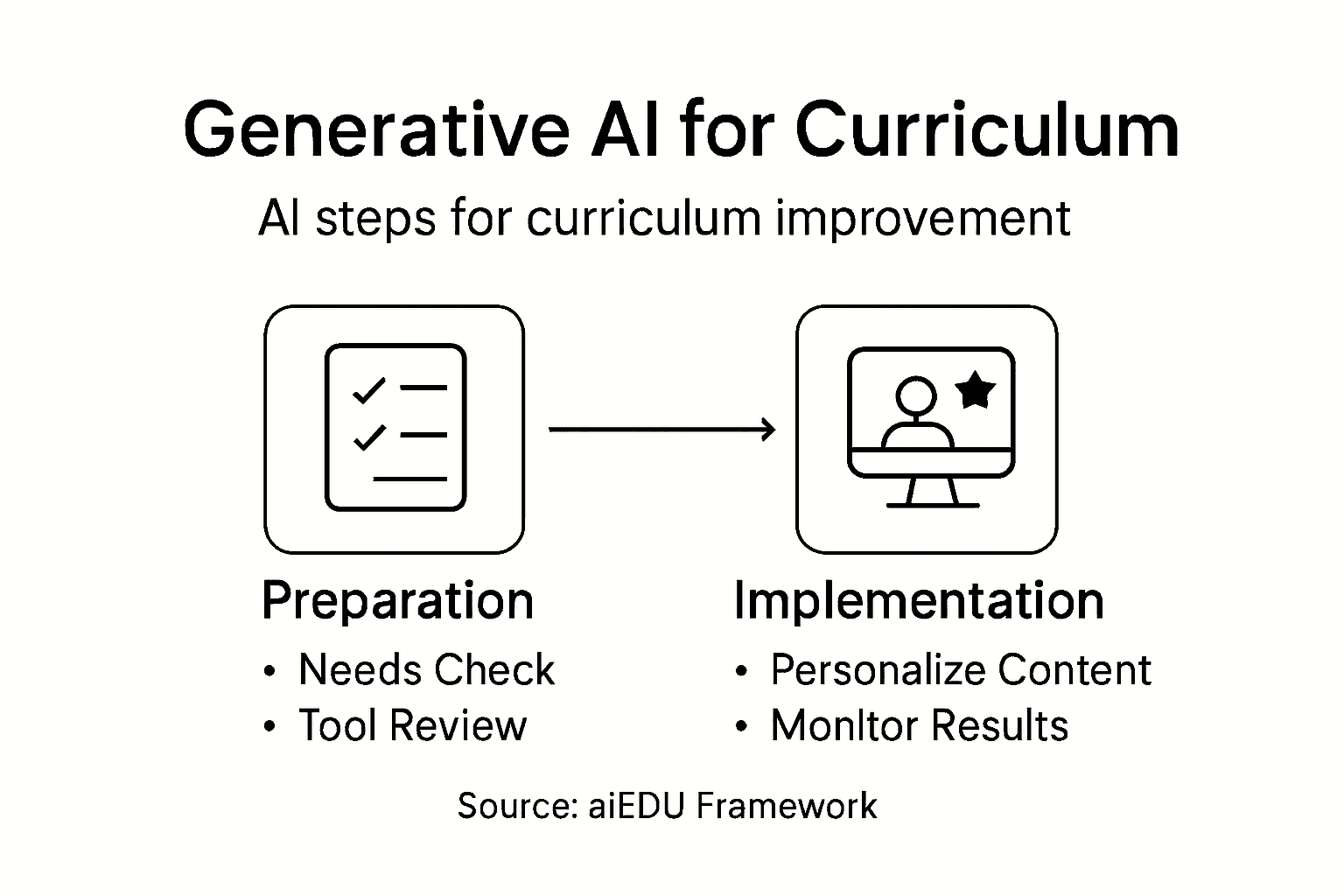
Leverage AI powered learning analytics to conduct comprehensive assessments of curriculum performance. Implement advanced tracking mechanisms that capture granular student engagement metrics, learning progression rates, and comprehension levels across different educational modules. Analyze these data points to identify specific areas of strength and potential improvement within your curriculum. Use AI tools to generate detailed performance reports that highlight individual student challenges, group learning trends, and potential pedagogical interventions. Compare student outcomes against predefined learning objectives to ensure your curriculum maintains high educational standards and adapts to emerging learning needs.
Establish a continuous improvement framework that integrates AI generated insights into your curriculum development process. Collaborate with teaching teams to translate analytical findings into actionable curriculum modifications. Create feedback loops that allow real time adjustments based on student performance data. Prioritize personalized learning pathways by using AI recommendations to develop targeted support strategies for students with diverse learning requirements. Maintain transparency by regularly sharing evaluation insights with educational stakeholders and demonstrating how technological insights contribute to educational quality and student success.
Pro tip: Develop a standardized dashboard that visualizes AI generated curriculum performance metrics to facilitate easier interpretation and strategic decision making.
Unlock Curriculum Success with Expert AI Integration
The challenges highlighted in “How to Use Generative AI for Curriculum Success” reveal a clear need for institutions to carefully assess AI readiness, select right tools, and create truly personalized learning experiences while maintaining quality and ethical standards. Educators and administrators face the pressure of balancing advanced AI-generated content with human oversight and ensuring student data privacy while scaling solutions effectively. These pain points are critical barriers that can limit the full potential of AI-enhanced education strategies.
At Airitual, we understand these obstacles and offer tailored AI-powered solutions specifically designed to support educational institutions. Our consultancy focuses on strategic partnership, enabling you to integrate generative AI technologies that improve curriculum design, lesson plan customization, and real-time learning analytics. By combining expert guidance with AI-powered tools for education, we empower your teaching staff to confidently harness AI, fueling richer student engagement and measurable learning outcomes. Don’t wait for the future of education to pass you by. Explore how Airitual’s approach can transform your curriculum development today and schedule your free strategy session at Airitual.
Frequently Asked Questions
How can I assess my institution’s AI readiness for curriculum integration?
To assess your institution’s AI readiness, start by evaluating your existing technological infrastructure, educators’ digital competencies, and students’ understanding of AI concepts. Conduct interviews with key stakeholders and create a detailed report to identify strengths, challenges, and opportunities for integrating AI into your curriculum.
What criteria should I use to select generative AI tools for curriculum design?
When selecting generative AI tools, consider criteria such as content customization, ease of integration, data privacy, and scalability. Create a comparison matrix that scores potential tools based on these factors, ensuring they align with your educational objectives and facilitate a smooth implementation process.
How can I personalize learning resources using generative AI?
You can personalize learning resources by leveraging AI technologies to create adaptive learning materials tailored to individual student needs. Utilize AI platforms to input learning objectives, student background information, and desired complexity levels to generate worksheets and interactive content suitable for diverse learners.
What should I consider when integrating AI outputs into lesson plans?
When integrating AI outputs into lesson plans, ensure the content meets educational standards and aligns with learning goals. Review AI-generated materials for quality and accuracy, and implement a comprehensive evaluation protocol that includes collaboration with colleagues for validation.
How can I effectively evaluate the curriculum’s performance using AI insights?
To evaluate your curriculum’s performance, use AI-powered learning analytics to track student engagement and comprehension levels. Analyze the data to identify strengths and areas for improvement, and collaborate with teaching teams to implement actionable modifications that enhance learning outcomes.
What are the best practices for maintaining human oversight over AI-generated materials?
Best practices for maintaining human oversight include establishing a standardized review process for all AI-generated content. Ensure that educators continually assess the quality, relevance, and accuracy of these materials to uphold educational integrity and meet curriculum standards.
Recent Comments